Mavi — project film

2026 · UX Research & Strategy

Mavi

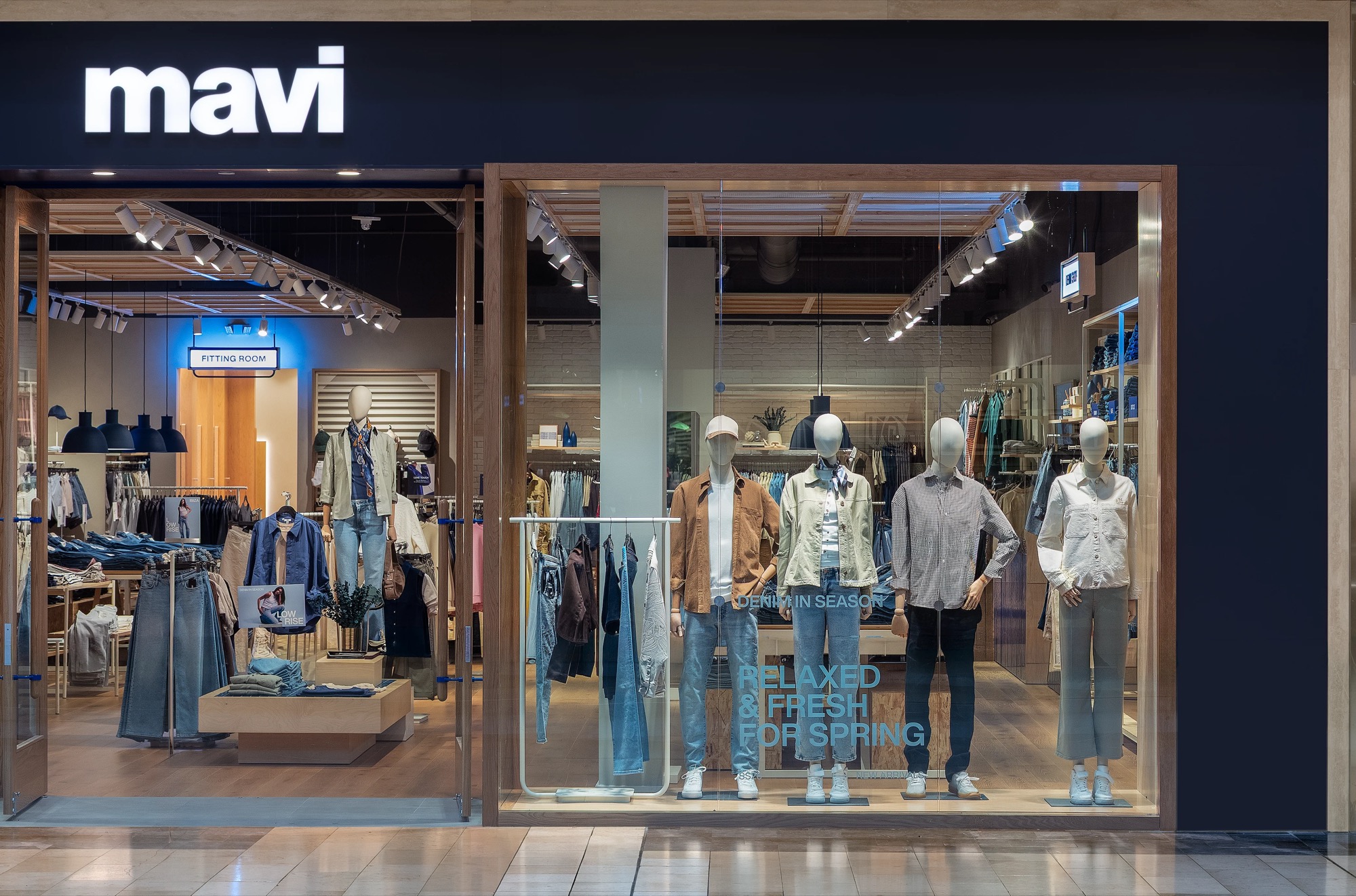
Mavi is Turkey's leading denim brand, built on 30 years of craft and a global retail presence. G & Co. was engaged to decode how the next generation of Turkish consumers — Gen Z and Millennials — perceive, shop, and connect with the brand, and to translate that understanding into a sharper digital experience.

Role

UX Researcher &

Strategist

Focus

Consumer research

Competitive audit

Timeline

2026

Company

Mavi / G & Co. Global

Overview

Overview

Mavi has a rare problem: everyone knows the brand, and the next generation still buys elsewhere first. Younger Turkish consumers rank Mavi among their most trusted names in denim — yet Trendyol wins the first click, global players win the fitting-room experience, and loyalty programs everywhere else win the repeat visit.

As the UX researcher and strategist on this engagement, I designed and analyzed a 200-person consumer survey, audited Mavi's Turkish digital experience heuristically, benchmarked nine competitors across global and local markets, and synthesized it all into three focus areas for the brand's digital roadmap.

200

consumers surveyed across Turkey, ages 18–40

9

competitor brands audited, global and local

3

strategic focus areas delivered to the client

The question underneath all of it: what does it take for a heritage brand to feel native to a generation that discovers fashion on TikTok, validates it through peers, and expects the digital experience to know them?

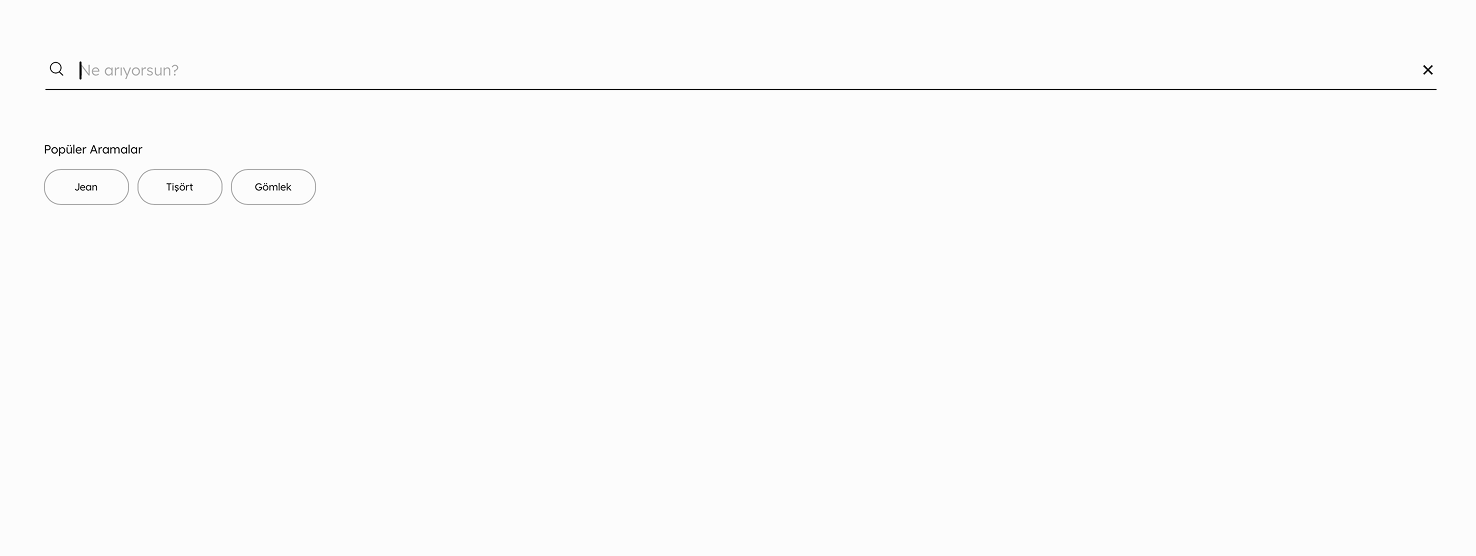
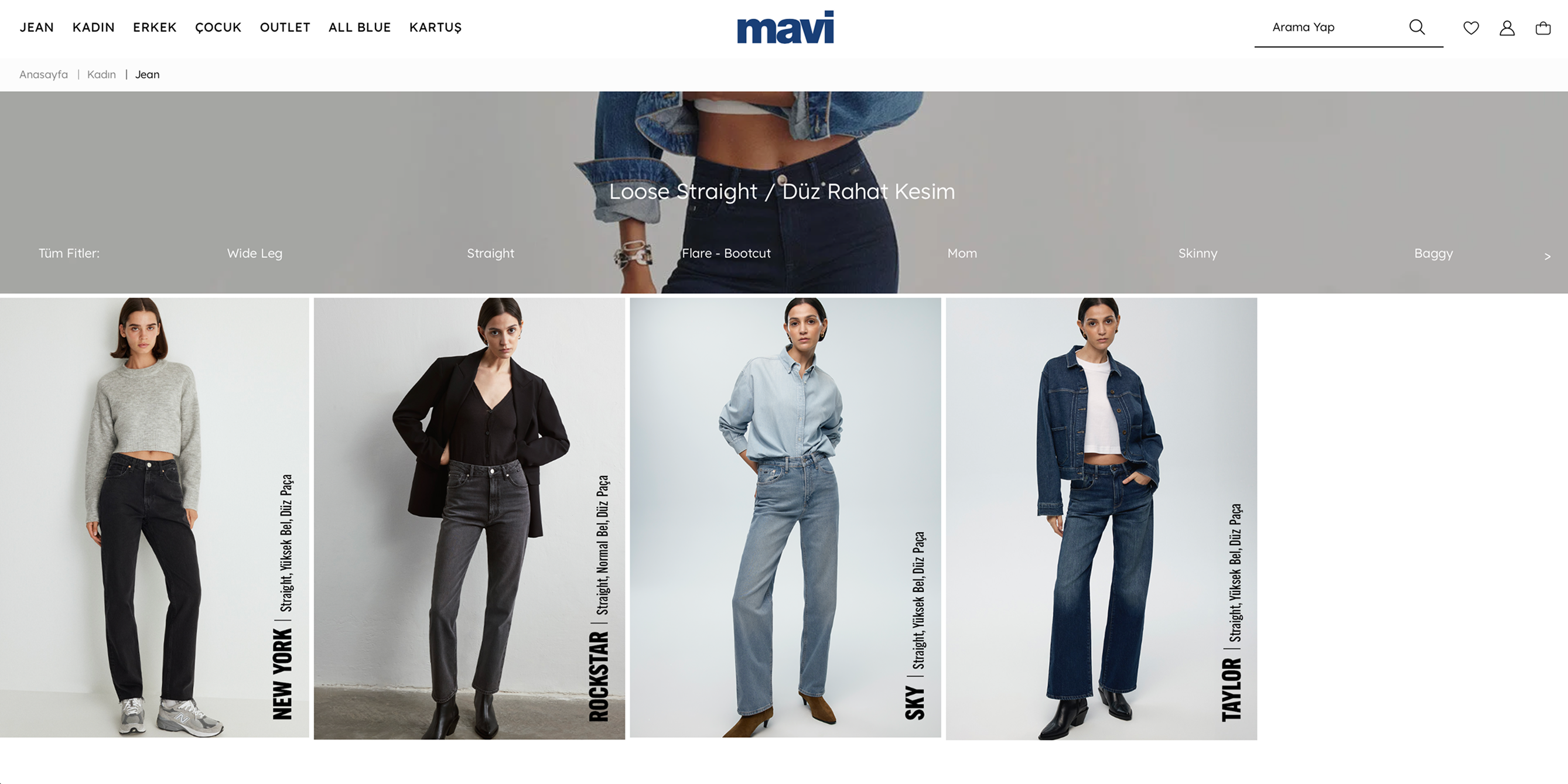
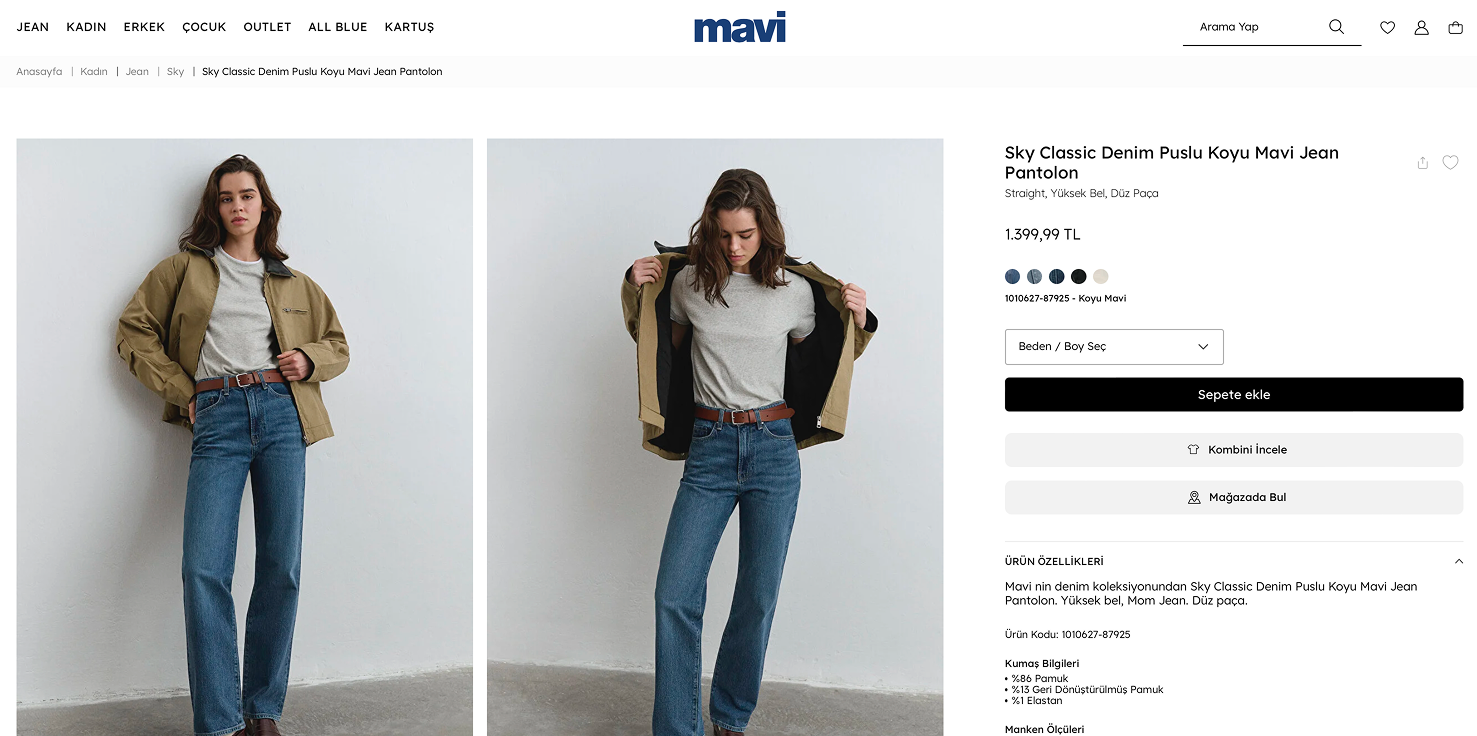
Before & after · the same page, side by side

Before
After

The Research

The Research

We fielded a 200-person survey across Turkey targeting ages 18–40 — Gen Z and Millennial consumers in Mavi's core urban markets. The instrument covered brand perception, shopping destinations, discovery channels, loyalty membership, and purchase drivers. I designed the questionnaire to separate what people say about brands from where their money and attention actually go.

The perception data was genuinely good news: consumers described Mavi as trendy, stylish, and high-quality — strong equity for a 30-year-old brand. And identity matters here:

72%

of respondents said they are more likely to buy from Turkish-origin brands — a cultural tailwind Mavi is uniquely positioned to own, and one no global competitor can copy.

But the destination data told a harder story. When we asked where people actually shop for jeans, Mavi ranked second — behind Trendyol, the marketplace that sells Mavi alongside everyone else:

Where do you shop for jeans? · ranked

Trendyol

Mavi

Zara

LC Waikiki

DeFacto

Levi's

The loyalty gap was the single sharpest finding in the study. Mavi runs a rewards program; enrollment shows how little it currently pulls:

Loyalty program membership

Trendyol

42%

Mavi Kartuş

22%

Discovery, meanwhile, has fully moved to social. Instagram (72%) and TikTok (68%) are where Turkish Gen Z finds fashion — and in a pattern that shaped our later recommendations, peer validation consistently outperformed celebrity endorsement as a purchase driver. Respondents were price-conscious, but willing to pay for quality and for brands that reflect their cultural identity.

Where fashion discovery happens

Instagram

72%

TikTok

68%

Celebrities

Friends & family

Key Insights

Key Insights

Synthesizing the survey with desk research on Turkish Gen Z consumer behavior, five insights carried the strategy:

01

Culturally hybrid, not globally generic

Turkish Gen Z blends global aesthetics with local identity. They don't want a Turkish Levi's — they want a Mavi that feels both internationally current and unmistakably theirs. The 72% Turkish-origin preference is an asset most global competitors can't touch.

02

Peers beat celebrities

Real people styling real purchases moved respondents more than campaign imagery. Brands surfacing user content and fit reviews (Uniqlo, Fabletics) earn trust that polished editorial can't.

03

Loyalty means belonging, not discounts

Discounts get sign-ups, but early access, member events, and experiential perks are what make a program feel like a club. Mavi's 22% enrollment vs. Trendyol's 42% is a depth problem, not an awareness problem.

04

For denim, fit is the experience

The most common anxiety in the category is whether jeans will actually fit. Whoever removes that anxiety digitally wins the purchase — and almost nobody in the Turkish market has.

05

Browse-first, buy-later behavior

Younger shoppers browse socially and on mobile for inspiration long before they intend to buy. Experiences optimized only for "I know what I want" shoppers leave the larger browsing audience unserved.

Competitive Landscape

Competitive Landscape

I audited nine brands across two lenses — the global names that set consumer expectations, and the local players competing for the same wallet. For each, the question wasn't “what are they doing?” but “what should Mavi take from them?”

Global benchmarks

Levi's

A value ladder (core → Premium → Made & Crafted) that lets customers self-select upward, and RedTab — loyalty built on access and experiences, not just points.

Zara

Editorial, image-led commerce that feels like a fashion magazine. Proof that restraint and brand emotion can outsell functional density — with no loyalty program at all.

Mango

Premium-feeling UX at accessible prices: clean segmentation, scroll-triggered polish, and "Combines perfectly" cross-category bundling that grows baskets gracefully.

Local & category competitors

Trendyol

Personalization at scale — favorites, browsing-history recommendations, influencer "Shop the Look" edits, and a mobile-first checkout that set the loyalty benchmark Mavi trails.

LC Waikiki & DeFacto

Mass-market reach with strong localized mobile apps — but utilitarian UX focused on discounts over emotional storytelling. Mavi shouldn't compete here on price.

Koton

Design-led fast fashion with emotionally engaging copy ("Be You") and strong local influencer campaigns — the closest local competitor for Gen Z attention.

Colin's & LTB

Turkish denim peers leaning on fit inclusivity, local production heritage, and sustainability storytelling — LTB even shows per-size stock transparency.

Ipekyol & Twist

Two ends of premium local positioning: refined lifestyle curation vs. playful individuality — both integrate denim into a cohesive wardrobe story rather than a standalone category.

Sefamerve & Beymen Club

Niche and premium players winning on community engagement and customer-centric services — flexible shipping, active social presence, belonging-first campaigns.

“Across nine brands, the biggest open gap was fit and sizing. For a denim brand where fit is the deciding factor, the size guidance experience is the product.”

Website Audit

Website Audit

With the market mapped, I ran a heuristic audit of Mavi's Turkish e-commerce experience through the eyes of a Gen Z shopper. The foundation is strong: a clean, mobile-friendly layout, imagery that lets denim tones breathe, comprehensive fit filtering, and personalization-forward messaging — “Senin fit'in hangisi?” (Which fit is yours?) is exactly the right instinct.

Mavi mega menu showing many fit and fabric categories
Depth that can overwhelm — the fit/fabric mega menu
Mavi filter drawer with long lists of product types, fits, and styles
Filters built for 'I know what I want' shoppers

But the audit surfaced five recurring friction points, all variations on one theme: the experience serves shoppers who already know what they want, and underserves the browsing majority.

Filter depth becomes decision fatigue

The extensive fit list (Regular, Loose, Slim, Oversize, Mom, Baggy, Skinny…) is great for specificity, overwhelming for inspiration-seekers.

Category overload

Many parallel categories and collection names (Mavi Edition, Classic Denim, All Blue…) compete for attention without a clear hierarchy.

Loyalty is invisible at the moments that matter

Kartuş exists in navigation, but membership calls-to-action are absent from category and product flows — a missed retention loop.

Copy describes, but doesn't connect

Supporting text is functional and generic where lifestyle-led, peer-led content would land harder with Gen Z.

1,690 products, one long scroll

Heavy category pages mean long load and scroll on mobile — where most of this audience shops.

The US site's Blue Rewards program shows the foundation is already built — points per dollar, a join flow, member messaging. What it lacks is presence in the shopping journey and reasons to belong beyond the discount.

Mavi Blue Rewards landing page with join-the-club messaging
Mavi Blue Rewards — a foundation waiting for depth

Benchmarks

Benchmarks

Two deep-dive benchmarks anchored the recommendations — one for loyalty, one for fit.

Loyalty · Levi's RedTab

RedTab is what a denim loyalty program looks like when it sells belonging instead of discounts: points and free shipping as table stakes, then early access to collabs, VIP member events, birthday rewards, and — most tellingly — Tailor Shop perks that turn a purchase into a relationship with the garment. The app onboarding asks preferences up front and personalizes from the first session.

Levi's RedTab member program benefit cards: rewards, free shipping, returns, exclusive access, VIP events, tailor shop, birthday reward
RedTab's benefit architecture — access and experiences over discounts
Levi's app onboarding screens personalizing the experience and pitching RedTab membership
Membership pitched at the moment of highest intent

Fit · Uniqlo's size guidance system

Uniqlo treats size guidance as a product, not a chart. Per-product measurements in a scannable table. A Compare Sizes tool that checks new items against what you already own. An on-model length guide filterable by the shopper's own height bracket. Real user fit reviews with height and size worn. And MySize ASSIST — an AI recommender that turns gender, age, height, weight, and fit preference into a confident size suggestion with a visual fit map.

Uniqlo size guide table and Compare Sizes tool
Precise measurements + comparison against owned items
Uniqlo on-model product length guide filtered by height
Length previews at the shopper's own height
Uniqlo MySize ASSIST AI size recommendation flow
MySize ASSIST — AI-recommended sizing

Against this benchmark, Mavi's basic size chart isn't just behind — it's conceding the single most decision-critical moment in denim e-commerce.

Recommendations

Recommendations

The final deliverable framed three focus areas, each tied directly to evidence from the research:

01

Make fit guidance the flagship feature

Build a size experience worthy of a denim specialist: per-product measurements, on-model length previews by height, user fit reviews with body metadata, and an AI size assistant modeled on Uniqlo's MySize ASSIST.

Why: Fit anxiety is the category's core friction — and the audit showed no Turkish competitor owns it yet.

02

Rebuild loyalty around belonging

Evolve Kartuş from a points program into a membership: early-access drops, member events, experiential perks, and loyalty prompts embedded in the shopping journey rather than parked in the nav.

Why: 22% enrollment vs. Trendyol's 42% — and the research shows Gen Z joins for access and identity, not discounts.

03

Embed social proof into commerce

Bring TikTok and Instagram content into product discovery, surface real customers styling real purchases, and partner with micro-influencers who reflect Turkish Gen Z's hybrid fashion identity.

Why: Instagram (72%) and TikTok (68%) drive discovery, and peer validation outperforms celebrity endorsement in this audience.

Reflection

Reflection

This project taught me that research earns its keep in the synthesis, not the data. Two hundred survey responses and nine brand audits produced hundreds of individual findings; the real work was compressing them into three arguments a client could act on. The loyalty gap — 22% vs. 42% — did more persuasive work than any chart deck section, because it converted a vague worry into a number with a competitor's name on it.

It also demanded cultural humility. I was researching a market I don't live in, for consumers whose hybrid local-global identity is easy to flatten from the outside. Grounding every recommendation in what Turkish respondents actually said — rather than what global UX patterns assume — is what kept the strategy honest.

If I ran it again, I'd pair the survey with moderated usability sessions on Mavi's own site — watching five shoppers hesitate at the size chart would have made the fit argument land even faster than the Uniqlo benchmark did. Quantitative data won the room; qualitative evidence would have won it sooner.